This week in AI didn’t bring flashy robots or sci-fi headlines. Instead, something more important happened. AI moved closer to normal life.
From your phone assistant getting smarter, to governments pushing AI into daily services, to studies showing AI thinking more creatively and offices using it more often; this week marked a shift. AI is no longer “future tech.” It’s becoming an everyday companion.
Let’s break down the most important stories from the week and why they matter to you, even if you’re not a tech person.
Table of Contents
- Apple’s Big Plan to Turn Siri into a Real AI Assistant
- OpenAI’s Push to Bring AI into Everyday Government Services
- New Study Reveals AI Can Be Surprisingly Creative
- Why AI Use at Work Is Rising Faster Than Ever
- What This Week Really Tells Us About the AI Future
1. Apple Prepares a Major AI Upgrade for Siri
What Happened
Apple is planning a major revamp of Siri, transforming it from a basic voice assistant into a more conversational, AI-powered helper; closer to a chatbot than a command tool.
The goal is simple: Siri should understand you better, talk more naturally, and help with real tasks instead of just setting alarms.
This move signals Apple’s serious entry into the AI assistant race, alongside tools like ChatGPT and Google’s AI services.
News Interpretation
For years, Siri felt… limited. You asked something slightly complex, and it replied with, “Here’s what I found on the web.”
Apple now realizes that users expect conversation, not commands.
This upgrade means Apple is shifting from “voice control” to “thinking assistant.” That’s a big mindset change.
Impact
- iPhone users may soon rely on Siri for planning, writing, and decision-making
- AI becomes deeply embedded in phones; not a separate app
- Apple’s privacy-focused approach may attract users wary of AI data misuse
Key Notes
- Siri is moving toward chatbot-style intelligence
- Apple is late; but entering seriously
- Phones may soon feel more like personal assistants than devices
2. OpenAI Wants AI to Be Part of Public Life
What Happened
At Davos, OpenAI announced efforts to partner with governments worldwide.
The idea is to use AI in public services such as education, healthcare, disaster planning, and administration. Instead of AI being limited to tech companies, OpenAI wants it working behind the scenes of daily governance.
News Interpretation
This is a major shift. AI is no longer just about productivity or apps; it’s becoming infrastructure. Think of AI helping manage hospitals, predict floods, or improve school systems. This move also signals that AI leadership isn’t just a tech issue anymore; it’s a national strategy issue.
Impact
- Citizens may experience faster public services
- AI could improve access to education and healthcare
- Governments may rely on AI for planning and crisis response
Key Notes
- AI is entering public systems, not just private companies
- Governments are treating AI as essential infrastructure
- This could shape how countries compete globally
3. Study Shows AI Can Be Creative: Sometimes More Than Humans
What Happened
A new research study found that AI systems can outperform the average human on certain creativity tests like idea generation and problem-solving tasks. However, top human creatives still remain ahead.
In short: AI isn’t replacing creativity; but it’s no longer just copying either.
News Interpretation
Creativity was long considered a “human-only” skill. This study challenges that belief.
AI doesn’t feel emotions, but it can mix ideas, patterns, and styles in unexpected ways; often faster than people.
This doesn’t mean artists are obsolete. It means creativity is becoming collaborative.
Impact
- Writers, designers, and marketers may use AI as a creative partner
- Idea generation becomes faster and more accessible
- Human originality still matters; but AI boosts the process
Key Notes
- AI can generate creative ideas, not just data
- Humans still lead at the highest creative levels
- Creativity is shifting from solo work to human-AI teamwork
4. AI Use at Work Is Becoming the New Normal
What Happened
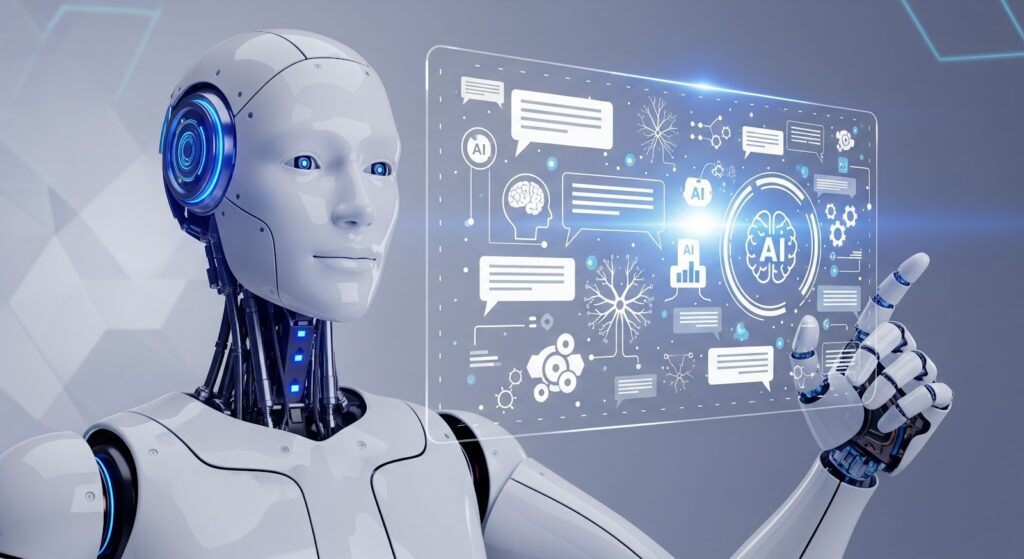
A recent workplace study shows that AI use is rising steadily across offices. More employees are using AI tools regularly for writing emails, summarizing documents, planning tasks, and analysis.
What was once “experimental” is now routine.
News Interpretation
This is how big shifts really happen; not overnight, but quietly. AI tools are slipping into daily workflows because they save time and reduce mental load.
Employees aren’t becoming lazier; they’re becoming more efficient.
Impact
- Jobs will value AI-friendly skills more than degrees alone
- Workers who adapt will move faster in their careers
- AI literacy becomes a basic workplace skill
Key Notes
- AI is now a daily work tool, not a novelty
- Adoption is driven by usefulness, not hype
- Comfort with AI may define future career growth
What This Week Really Tells Us
This week’s AI news shares one clear message:
AI is no longer trying to impress you. It’s trying to help you.
From your phone to your workplace to public services, AI is quietly blending into everyday life; less dramatic, but far more powerful.
FAQ: This Week in AI
Q1. Is AI going to replace Siri or improve it?
It will improve it. Siri is becoming smarter, not disappearing.
Q2. Should people worry about governments using AI?
Caution is needed, but when used responsibly, AI can improve public services significantly.
Q3. Does AI being creative mean artists will lose jobs?
No. AI supports creativity; it doesn’t replace human imagination.
Q4. Do I need to learn AI for my job now?
You don’t need to be an expert, but understanding and using AI tools is becoming important.
Thanks for your time! Support us by sharing this article and exploring more AI videos on our YouTube channel – Simplify AI
Leave a Reply